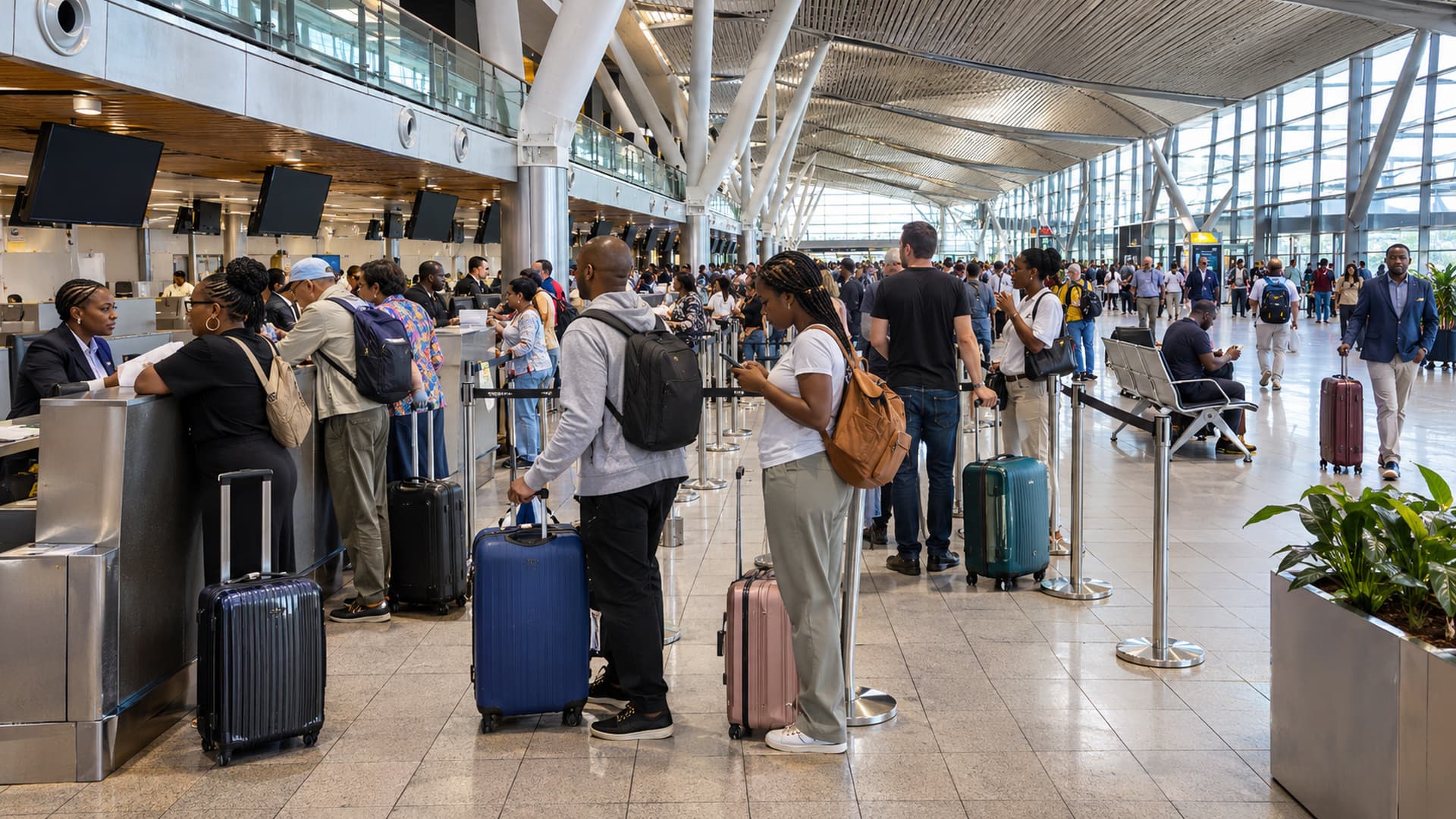
South African air travel in 2025/26: what ACSA's passenger figures mean for travellers
Airports Company South Africa reported more than 20.5 million departing passengers across its airport network in the 2025/26 financial year, up from nearly 19 million in 2024/25. The result points to a busier network over the year, but it does not mean every route, airline or departure time experienced the same change.
ACSA's 2025/26 integrated report records 20,579,138 departing passengers across its nine airports, compared with 18,973,268 the previous financial year. These are departing passenger movements in the company's network, not a count of unique people and not the total number of arrivals and departures across every airport in South Africa.
The figures provide useful background for people planning domestic or international travel. They show the scale of traffic through the main gateways and regional airports, while illustrating why a national total cannot tell you the price or availability of a particular flight. Travellers still need to compare the actual itinerary, baggage and conditions for their dates.
What the figures count
The ACSA table is labelled as operational volume for departing passengers. Someone who takes multiple flights over the year can be counted more than once, and a departing movement is different from an arrival. The total covers ACSA's airport network, not every airport or airfield in the country.
The reporting period is the company's financial year, 2025/26. It should not be described as a calendar-year total for 2026. The comparison with 2024/25 uses the previous financial year in the same report. That distinction matters when looking at other traffic figures, which may be monthly, calendar-year or arrivals-and-departures totals.
A larger total indicates that more departing passenger movements were recorded across the network in the period. It does not, by itself, tell us how many seats were available on a specific route, how often a flight departed or whether a particular fare increased. Nor does it mean every airport grew at the same rate.
For a traveller, the information is context rather than a booking rule. It can help explain why an airport network needs capacity and why different gateways play different roles. The details that determine a particular trip are still the date, flight schedule, terminal, fare and transport plan.
The major gateways
The report lists 10,037,360 departing passengers at O.R. Tambo International Airport in 2025/26, compared with 9,280,396 in 2024/25. Cape Town International Airport recorded 5,676,280, compared with 5,259,525, while King Shaka International Airport recorded 2,809,832, compared with 2,528,336.
These figures show the scale of the three airports within the ACSA network. They should not be added to arrivals or described as the number of people living in their respective cities. Some passengers connect through an airport, some travel for business and others visit family or take a holiday. The table does not assign a purpose to every movement.
The large airports support many domestic and international journeys, but a traveller should check the actual flight schedule and airport rather than assuming every route operates daily or from every gateway. An itinerary may also use an airport outside the ACSA network, and the airline's current information remains the source for its services.
When comparing flights, identify the airport and local departure time clearly. A convenient fare may still require a long journey to the airport, especially for an early departure. Allow time for the airline's check-in and bag-drop requirements, security and any airport-specific procedures. The correct arrival time depends on the airline, route and current guidance.
Regional airports matter to the full itinerary
ACSA's report also lists departing passenger figures for airports including Chief Dawid Stuurman in Gqeberha, George, King Phalo in East London, Bram Fischer in Bloemfontein, Kimberley and Upington. George recorded 471,639 departing passengers in 2025/26, compared with 420,352 in 2024/25; the report lists 795,295 at Chief Dawid Stuurman, compared with 761,664.
A regional airport can reduce the need for a long road journey for some travellers. It can also form part of a connecting itinerary through a larger gateway. Whether that is useful depends on current schedules, the traveller's origin and the overall cost. The annual figures do not guarantee a particular service or frequency.
If a trip requires a connection, look at the full journey. Check whether both flights are on a single ticket, how much time is available between them and whether baggage must be collected or rechecked. The assistance available after a missed connection depends on the ticket, circumstances and applicable rules. Separate bookings should not be assumed to carry the same arrangements as a connected itinerary.
Travellers should also consider ground transport at both ends. A regional airport may be closer to the final destination than a major gateway, but a transfer or vehicle may still be needed. Compare the fare together with those costs and the time involved before deciding which routing offers the best value.
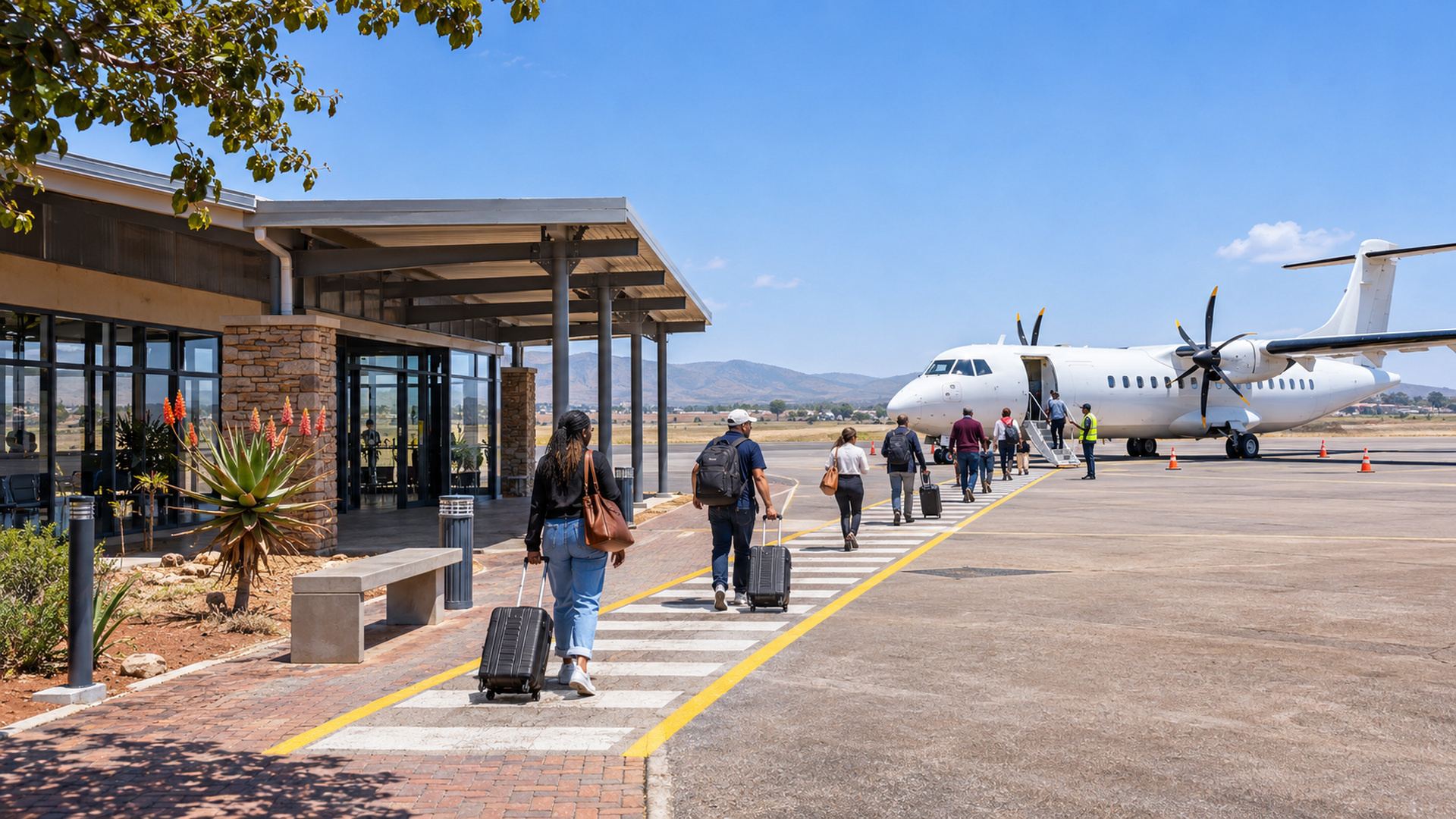
Route development does not mean every service is permanent
In the network section of its 2025/26 integrated report, ACSA describes route additions, frequency changes and discontinued services during the financial year. It also reports that much of the capacity growth came from changes to established routes. This is a description of a past reporting period, not a current timetable.
Airline schedules can change after an announcement because of commercial and operational decisions. A route mentioned in an annual report may operate on particular days, be seasonal, change frequency or cease to be offered. A service not mentioned in the report may also be available later. Check the airline's current schedule and the exact dates before planning around any route.
This distinction is important for connecting journeys. A route with fewer departures can offer less flexibility if the first leg is delayed or a meeting date moves. A frequent route may provide more choices, but a specific low fare or seat is still subject to availability. Neither a route announcement nor a historic traffic figure is a promise that a particular itinerary will be available.
Before paying, review the complete offer, including the operating airline, baggage and change rules. If a journey includes more than one carrier, identify who handles each segment and whom to contact if a change is needed. Keep the confirmation and ticket details once they have been issued.
Does more traffic mean higher fares?
The passenger data alone cannot answer that question. A fare depends on a combination of factors, including the route, travel date, availability, airline, fare conditions and services included. Demand and capacity may influence prices, but the ACSA passenger table does not provide a universal fare change for travellers.
Avoid treating a network-wide traffic increase as proof that every flight will cost more, or that a particular day will be the cheapest. A flight search may show different prices for nearby dates, different airports or different baggage allowances. Compare the final amount for the actual travellers rather than relying on a single headline number.
An inexpensive base fare may work well for a passenger with fixed dates and only a permitted cabin bag. Another passenger may need checked luggage or a ticket that allows changes. The most useful comparison includes those requirements, as well as the cost and time of reaching the airport.
Prices and availability can change during the booking process. Review the final offer before paying and keep the confirmation. If flexibility is important, read the actual change and cancellation conditions. A ticket that permits a date change can still involve a fare difference or other charge.
Airport experience and planning
More passengers across a network can place importance on reliable airport operations, but annual totals do not predict the length of a queue at a given terminal on a given day. Weather, staffing, security procedures, aircraft schedules and many other factors can influence a particular journey.
Use the operating airline's current guidance for check-in, baggage drop and boarding. International and domestic journeys may have different requirements, and an airline can set deadlines that matter to your ticket. Arriving at the airport before a published deadline does not guarantee that every part of the process will be complete if there are unexpected delays, so plan a reasonable margin for your circumstances.
Check the terminal and flight status before travelling. If using parking or a transfer, consider the time needed to reach the check-in area. Keep identification and travel documents accessible and follow instructions from the airline, airport and security staff.
If a flight is delayed or changed, consult the operating airline and booking provider for information relevant to the ticket. Assistance, rerouting or refunds depend on the circumstances, contract and applicable rules. Keep records of communications and receipts where they may be relevant to a later enquiry.
Baggage and security remain airline-specific
Busy travel periods can make advance preparation particularly useful, but the baggage allowance comes from the specific ticket and airline rules rather than the airport's annual passenger statistics. Confirm the number, dimensions and weight of permitted items for each flight, including connections.
A cabin-bag allowance and a checked-bag allowance are different. A low fare may not include a checked bag, and adding one can change the final price. If the itinerary involves multiple carriers, check the allowance and any conditions for special equipment with the responsible provider rather than assuming that a rule from one segment applies to all.
Safety restrictions are separate from commercial fees. The South African Civil Aviation Authority publishes guidance on dangerous goods and lithium batteries. Check the operating airline's current rules for your devices and any international segments. If an item is uncertain, ask before arriving at the airport.
Pack documents, medication and valuables according to the airline's and relevant authorities' guidance. If a cabin bag is taken for checking at the gate, tell staff about any items that cannot be placed in checked baggage and follow their instructions. Requirements can depend on the item and carrier.
International connections need more than a schedule
South Africa's major airports serve domestic and international journeys, but a convenient connection on a search page must still work for the individual traveller. Passport, visa, transit and health requirements can depend on nationality and the countries visited or transited. Consult current official government and airline information for the exact route.
Check whether the itinerary requires a change of airport or an overnight stop. Baggage collection, border formalities and transfer time can make two flights less straightforward than their listed connection time suggests. If the flights are booked separately, establish the risks and costs if the first service changes.
A route's presence in a past report is not evidence that entry conditions are unchanged. Verify the requirements before buying a restrictive ticket and again before departure. The final responsibility for travel documents generally rests with the traveller, while airlines can explain the documentation they require at check-in.
What to take from the report
ACSA's 2025/26 report shows a larger number of departing passenger movements across its nine-airport network than in the previous financial year. O.R. Tambo, Cape Town and King Shaka accounted for substantial volumes, while regional airports also contributed to the network. The numbers describe a financial year and a defined set of airports; they do not predict a fare or guarantee a schedule.
For a practical booking decision, compare current flights for your exact route and dates. Review the final total, baggage, connection, airport transfer and fare conditions. Use the Cheap Flight SA website to explore domestic and international options, and check the current airline and official travel information before confirming your plans.
More From Travel News
The Psychology of Seat Selection on Short Flights
Why do travellers choose window or aisle seats on short flights? Exploring passenger psychology in South African commercial aviation.

How Aviation Shapes South Africa’s Coastal Tourism
Aviation expands South Africa’s coastal tourism by redistributing seasonal travel, boosting beach destinations, and connecting global and domestic markets.

Inside Airline Pilot Training for Modern Aircraft
Discover how airlines train pilots for modern aircraft using advanced simulators, strict certification pipelines and continuous recurrent training.
Stay Informed, Stay
Ahead of the Curve
We don't just follow the headlines — we dive deeper. Our well-researched content is designed to empower you with the knowledge needed to navigate an industry shaped by innovation.
Seasoned Professionals
Industry stats and market performance metrics.
Passionate Enthusiasts
Vehicle launches and future transport concepts.