
The Invisible Hand in Every Flight
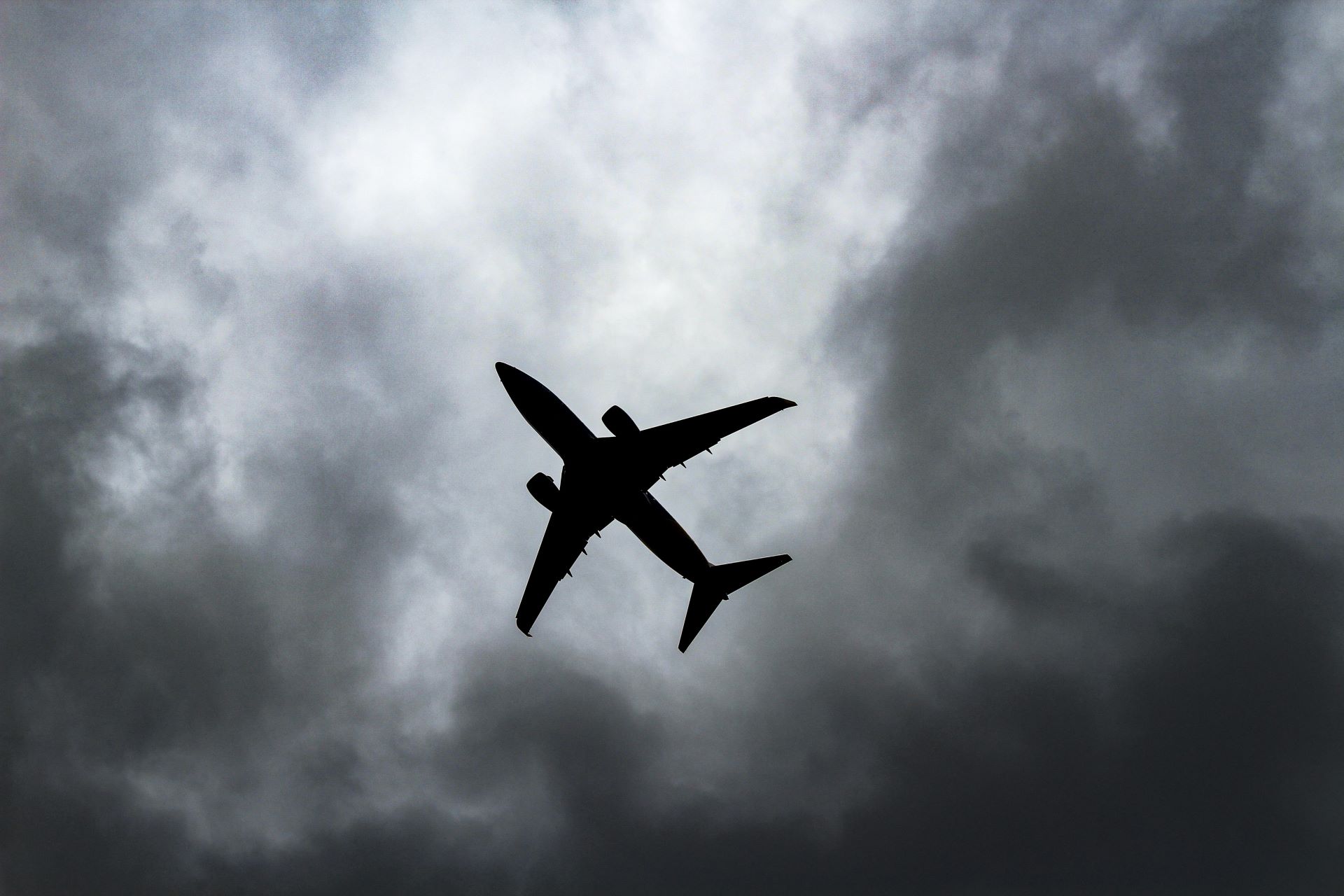
Every commercial flight you take begins long before the aircraft leaves the runway. While passengers focus on boarding gates, overhead lockers, and inflight entertainment, an intricate invisible system is already shaping the journey. At the heart of it all is weather forecasting.
In commercial airline tourism, weather is not just background noise. It is a dynamic force that determines whether a flight departs on time, how it travels through airspace, and sometimes whether it lands at its intended destination at all. Behind every smooth journey is a complex orchestration of atmospheric data, predictive models, and human interpretation.
From Johannesburg to Dubai, Cape Town to London, weather forecasting quietly governs the flow of global aviation like a conductor guiding an unseen orchestra in the sky.

Weather as a Flight-Safety Architecture
Modern aviation treats weather not as an inconvenience but as a structural component of safety design. Before a single engine spools up, meteorological data is already influencing:
Aircraft routing decisions
Fuel calculations
Altitude planning
Takeoff and landing sequencing
Diversion contingencies
Commercial airlines operate within a constantly shifting atmospheric map. Thunderstorms can rise faster than aircraft climb rates. Jet streams can either accelerate or hinder long-haul efficiency. Even seemingly minor changes in humidity or wind shear can reshape an entire flight plan.
In airline tourism, where schedules are tightly coordinated and passenger experience is paramount, these decisions are not optional. They are fundamental to operational survival.
Satellite Systems: Eyes Above the Clouds
Modern weather forecasting in aviation begins far above the aircraft, in orbiting satellite systems that continuously scan the Earth’s atmosphere.
These satellites capture real-time imagery of cloud formation, storm development, oceanic temperature shifts, and atmospheric pressure patterns. Infrared sensors detect temperature differences even through thick cloud cover, allowing meteorologists to see storm systems evolving long before they become visible from the ground.
For commercial airlines, this is invaluable. A storm system forming over the Atlantic or Indian Ocean can influence flight corridors between continents hours or even days in advance.
Satellite data feeds directly into airline operations centres where flight dispatchers and meteorologists collaborate to adjust routes. In South African aviation, for example, long-haul flights departing from OR Tambo International Airport rely heavily on satellite tracking of southern hemisphere storm belts and tropical systems.
The result is not just safer flights, but smoother passenger experiences with reduced turbulence and fewer delays.
Radar Systems: The Real-Time Shield
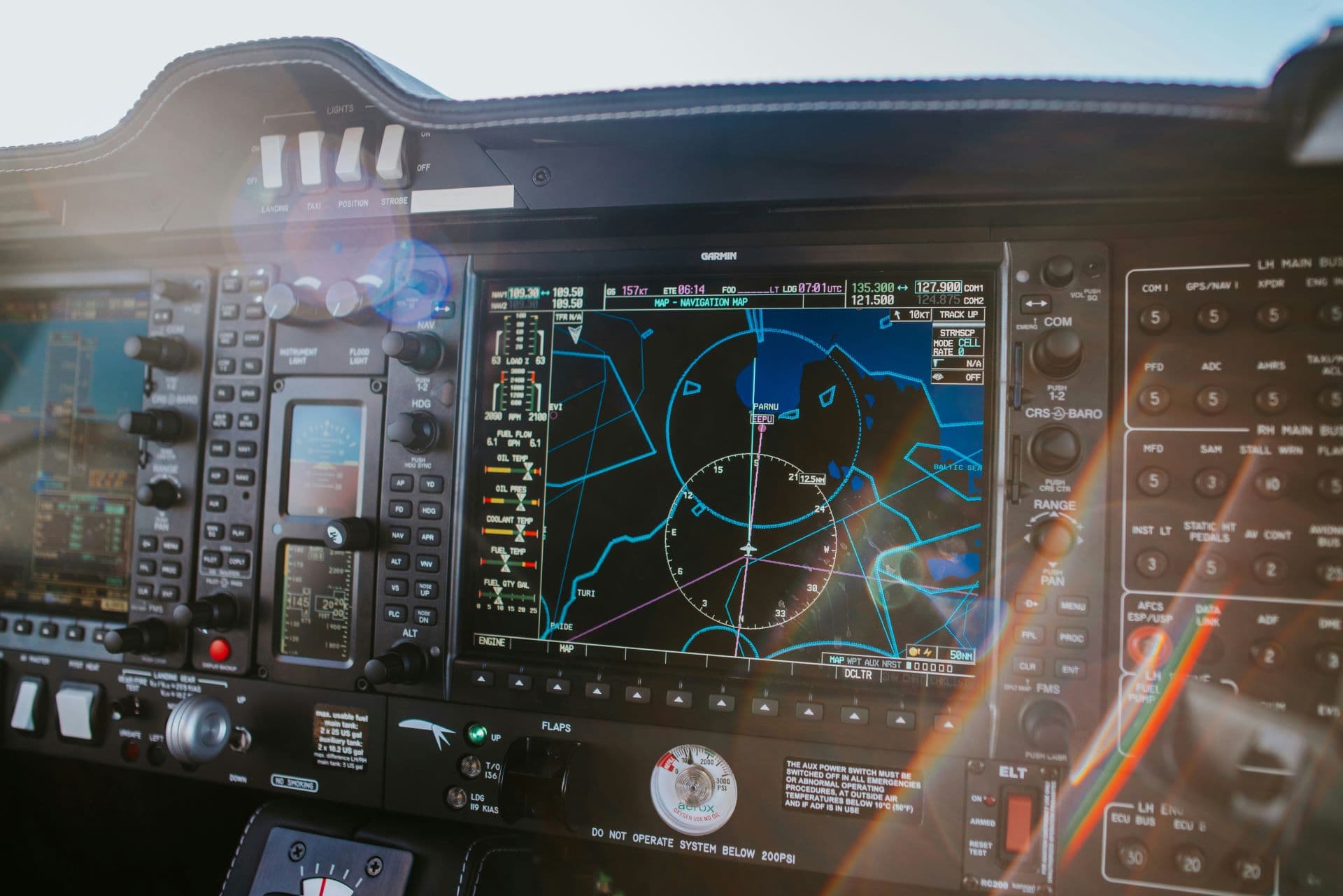
While satellites provide the wide-angle view, radar systems operate as the real-time protective shield for aircraft in motion.
Weather radar used in aviation detects precipitation intensity, storm cell movement, and wind shear conditions. Unlike satellite systems, which observe from above, radar systems actively scan the airspace around aircraft and airports in real time.
Pilots receive continuous updates about storm cells developing along their flight path. Air traffic controllers use this data to adjust sequencing, ensuring that arriving and departing aircraft are not exposed to hazardous conditions.
In busy commercial tourism hubs such as Johannesburg, Cape Town, and Durban, radar becomes especially critical during summer thunderstorm seasons. Sudden convective storms can disrupt entire airport operations within minutes if not properly monitored.
Radar allows aviation teams to do something remarkable: navigate weather not just as a forecasted event, but as a living, moving structure in three-dimensional space.
Predictive Routing: Designing the Smoothest Sky
One of the most transformative developments in aviation meteorology is predictive routing. This is where forecasting shifts from observation to anticipation.
Using artificial intelligence, historical weather patterns, and real-time atmospheric data, predictive routing systems calculate optimal flight paths that minimise exposure to turbulence, headwinds, and storm systems.
Instead of flying in straight lines between destinations, aircraft often follow curved, weather-aware routes that may appear longer on a map but are more efficient and significantly safer in practice.
For commercial airline tourism, predictive routing delivers three major benefits:
Reduced fuel consumption through wind optimisation
Improved passenger comfort through turbulence avoidance
Higher on-time arrival performance despite weather disruptions
On long-haul routes out of South Africa, flights often adjust altitude and trajectory mid-journey to ride jet streams or avoid equatorial storm bands. These adjustments are invisible to passengers but crucial to operational efficiency.
Predictive routing essentially turns the sky into a dynamic navigation puzzle, constantly solved and re-solved in real time.
The Human-Machine Collaboration
Despite advances in automation, weather forecasting in aviation remains deeply human at its core. Meteorologists, flight dispatchers, and pilots interpret data collaboratively.
Forecast models can suggest probability, but humans determine operational decisions. A satellite might show storm development, but an experienced aviation meteorologist understands its likely trajectory and intensity based on regional climate behaviour.
Pilots, too, play a critical role. They provide in-flight feedback on turbulence, cloud density, and wind changes, feeding real-world data back into forecasting systems.
This collaboration ensures that aviation weather forecasting is not purely algorithmic. It is adaptive, experiential, and continuously refined through human insight.
Weather and the Passenger Experience
For travellers, weather forecasting manifests in ways that are often subtle but deeply impactful.
A smooth long-haul flight between Johannesburg and London may feel uneventful, but behind that calm cabin experience lies hours of meteorological planning. Routes have been adjusted to avoid turbulence corridors. Altitudes have been chosen to optimise jet stream assistance. Arrival sequencing has been aligned with airport weather windows.
Even boarding times and gate assignments can be influenced by weather predictions. Ground operations depend on wind direction, lightning activity, and precipitation forecasts.
In commercial airline tourism, weather forecasting quietly shapes passenger satisfaction. Fewer delays, smoother flights, and safer landings all contribute to the perception of reliable air travel.
Extreme Weather and Aviation Disruption
Not all weather interactions are smooth. Severe weather events remain one of the most significant disruptors in aviation.
Thunderstorms, tropical cyclones, volcanic ash clouds, and severe turbulence zones can force airlines to reroute or delay flights entirely. While modern forecasting has dramatically improved avoidance strategies, unpredictability still exists.
Volcanic ash, for instance, is invisible to radar and can cause catastrophic engine damage. In such cases, satellite monitoring and atmospheric modelling become critical tools for detection and avoidance.
In regions with rapidly changing weather patterns, such as parts of southern Africa, airlines must maintain flexible scheduling systems that can respond to sudden atmospheric shifts.
These disruptions, while inconvenient for passengers, are essential safety interventions that prevent far more serious risks in the air.
The Economics of Weather Intelligence
Weather forecasting is not only a safety tool but also a major economic factor in aviation tourism.
Fuel efficiency is directly influenced by atmospheric conditions. Headwinds increase consumption, while tailwinds reduce it. Even small improvements in routing efficiency can translate into significant cost savings across airline fleets.
Airlines invest heavily in meteorological systems because accurate forecasting reduces operational waste. Delays caused by weather misjudgement can cascade through global airline networks, affecting connecting flights, crew scheduling, and airport congestion.
In the tourism sector, reliability is currency. Destinations dependent on air travel, including many South African tourism hubs, rely on stable aviation operations to sustain visitor flow.
Weather intelligence therefore becomes part of a broader economic ecosystem that supports global tourism infrastructure.
Climate Change and Evolving Flight Patterns
As global climate systems shift, aviation weather forecasting faces new challenges.
Jet streams are becoming less predictable in some regions, while storm intensity is increasing in others. This affects long-haul route planning and introduces greater variability into established flight corridors.
Airlines are now required to adapt forecasting models to evolving atmospheric behaviour rather than relying solely on historical patterns.
For commercial airline tourism, this means more dynamic planning, increased reliance on satellite data, and greater investment in predictive analytics.
The sky is no longer a stable map. It is a changing environment that demands continuous recalibration.
The Future of Weather-Driven Aviation
The future of aviation weather forecasting is moving toward deeper integration of artificial intelligence, machine learning, and real-time global data networks.
Next-generation systems will likely provide aircraft with continuously updated micro-routing capabilities, allowing flights to adjust minute by minute based on atmospheric changes.
We are also moving toward hyper-local forecasting, where turbulence prediction becomes precise enough to map specific air pockets along flight paths.
In the context of commercial airline tourism, this evolution promises even smoother journeys, fewer disruptions, and a more efficient global aviation network.
The sky is becoming increasingly readable, not as a static space, but as a living system of data.

The Sky Is Never Still
Weather forecasting in aviation is not a background process. It is the nervous system of global air travel.
From satellite systems orbiting above Earth to radar sweeping across storm-filled skies, and predictive routing engines calculating optimal paths, every flight is shaped by a continuous stream of atmospheric intelligence.
For passengers, this translates into safety, comfort, and reliability. For airlines, it is operational precision. For the tourism industry, it is the foundation that keeps global mobility alive.
Every smooth landing is a quiet success story written in wind patterns, cloud formations, and predictive algorithms.
The sky may look calm from a window seat, but beneath that calm is a constantly evolving map of decisions, forecasts, and invisible guidance systems ensuring that every journey finds its way home.
Elisha Roodt
Our travel editorial desk specializes in uncovering the best flight deals and destination insights within South Africa. We bring you first-hand updates on airline industry moves and budget travel hacks.
Stay Informed, Stay
Ahead of the Curve
We don't just follow the headlines — we dive deeper. Our well-researched content is designed to empower you with the knowledge needed to navigate an industry shaped by innovation.
Seasoned Professionals
Industry stats and market performance metrics.