
Business flights from South Africa: comparing cost, time and flexibility
A business flight is rarely an isolated purchase. It is part of a meeting, site visit, conference or client engagement, and a change to the journey can affect colleagues, accommodation and working time. The lowest fare may be a sensible choice, but its value depends on the total cost and the likelihood that plans will change.
For an organisation booking travel from South Africa, a useful comparison includes the airport, schedule, baggage and fare rules as well as the ticket price. An early non-stop flight might reduce an overnight stay; a later flight may be more comfortable but require an extra hotel night. A restrictive ticket can be economical when dates are fixed, while a flexible option may reduce exposure when a meeting is still being confirmed.
Cheap Flight SA is described as a service for comparing domestic and international flights. This article explains how travellers and travel arrangers can assess flight options for business purposes. It does not assume that every fare, airline or corporate service is available through a particular booking channel.
Start with the purpose and fixed commitments
A flight search is more useful when the traveller knows what cannot move. Identify the meeting location and start time, the date on which the traveller must arrive and any commitments after the visit. Then work backwards to the airport, ground transport and check-in requirements.
For a one-day meeting, the question may be whether an outbound and return flight leave enough time for travel at both ends. For a conference, the traveller may need to arrive the previous evening. For a site visit, the final destination may be some distance from the airport, making a regional airport or a road transfer relevant to the comparison.
Do not rely only on the scheduled arrival time. Consider baggage collection, a transfer to the venue and a reasonable margin for delays. A flight that lands shortly before a meeting may be cheaper, but the risk of arriving late can have a cost that does not appear in the fare.
For international work, identify passport, visa, transit and other requirements before committing. The traveller's nationality and the countries visited or transited affect what is needed. Check current official government and airline information for the specific journey, and allow time for required applications or documents.
Compare airports as part of the trip
A city may have more than one airport, and the closest to a home address is not necessarily the most convenient for every flight. Compare the available departures with the time and cost of getting to each airport. A lower fare can be offset by a longer transfer, parking or an overnight stay.
Check the airport name and code on the booking. IATA's code search can help identify airports, but the confirmation and airline information should be used to verify the actual terminal and service. A search by city can include options from different airports where those services are offered.
At the destination, compare the route from the airport to the meeting or accommodation. A regional airport may reduce road travel for some itineraries, while a larger gateway may offer more flight choices. Neither is automatically better. The decision depends on the available schedule, cost, connection and ground transport.
Allow for practical constraints. An early flight may require transport before normal office hours. A late arrival may need a prearranged transfer or a hotel with suitable check-in. The flight price should be considered alongside those needs, particularly when several employees are travelling together.
Non-stop and connecting options
A non-stop flight can reduce the number of flight segments and remove the need to make a connection. That can be valuable when the traveller has a fixed meeting or carries equipment. It does not guarantee an on-time arrival, and it may cost more or operate at a less convenient time than an alternative.
A connecting itinerary can provide access to a destination or schedule that is not available non-stop. Compare the full duration, the airport where the change occurs and the time between flights. Check whether baggage is transferred or needs to be collected and rechecked, and whether any transit or airport-change requirements apply.
A connection on one ticket and two separately purchased flights are different arrangements. Assistance after a missed connection depends on the contract, circumstances and applicable rules. When flights are purchased separately, do not assume the second carrier will rebook the traveller without charge if the first flight is delayed. Ask the booking provider and airlines how the exact itinerary is handled.
Consider the consequence of a missed connection as well as its probability. A later meeting, a backup departure or a flexible ticket may reduce disruption. A tight itinerary with no practical alternative can create a larger business impact than the difference between two fares. The appropriate buffer depends on the journey and the organisation's priorities.
Compare the complete cost, not only the headline fare
The price displayed in a search may change when the correct passengers and required services are selected. Compare the final amount for the same route, dates and travellers. Include checked baggage, seats or other extras that the traveller actually needs, and note the currency and payment terms.
Ground transport and accommodation can change the total. A flight that arrives too late for the planned meeting may require an extra hotel night. An early departure may require a taxi at a higher-cost time or airport parking. These costs are not always paid to the airline, but they belong in a business travel comparison.
Consider working time without pretending that every minute has an identical monetary value. A longer connection might allow useful work, or it might require the traveller to remain in transit when they need to be on site. A late return may save a night's accommodation but create fatigue before the next working day. The organisation can weigh these effects against the fare using its own policy.
A hypothetical employee travelling with a laptop and one cabin bag may not need a checked-bag allowance. Another carrying display materials may need additional baggage or a different transport arrangement. Do not buy services simply because they are included in a more expensive bundle; equally, do not ignore a necessary bag when comparing a low base fare.
Fare rules and the value of flexibility
Business plans can change. A meeting may move, a project may require an extra day or another colleague may need to attend. Fare conditions determine what can be changed and at what cost, but the wording varies by airline and ticket.
Read the conditions for the specific fare before payment. A ticket that permits changes may still require a fee, a difference in fare or both. Availability on the desired replacement flight is not guaranteed. Cancellation, refunds and name corrections may have separate rules. Ask the provider if the terms are unclear.
A restrictive ticket can be good value for a confirmed conference with fixed dates. A more flexible option may be useful when a meeting is not yet firm. The price premium should be assessed against the amount at risk and the organisation's experience of changes, without assuming that a flexible fare makes every alteration free.
Voluntary changes and an airline-initiated schedule change can be handled differently. The rights and options available depend on the circumstances, the contract and applicable rules. Keep the ticket conditions and any communication so that the responsible provider can assess the actual case.
Baggage, equipment and airline rules
Cabin and checked-baggage allowances vary by airline, fare and route. A laptop bag, a cabin suitcase and a checked case may be treated differently. Check the permitted pieces, size and weight for every segment, especially when an itinerary involves multiple airlines.
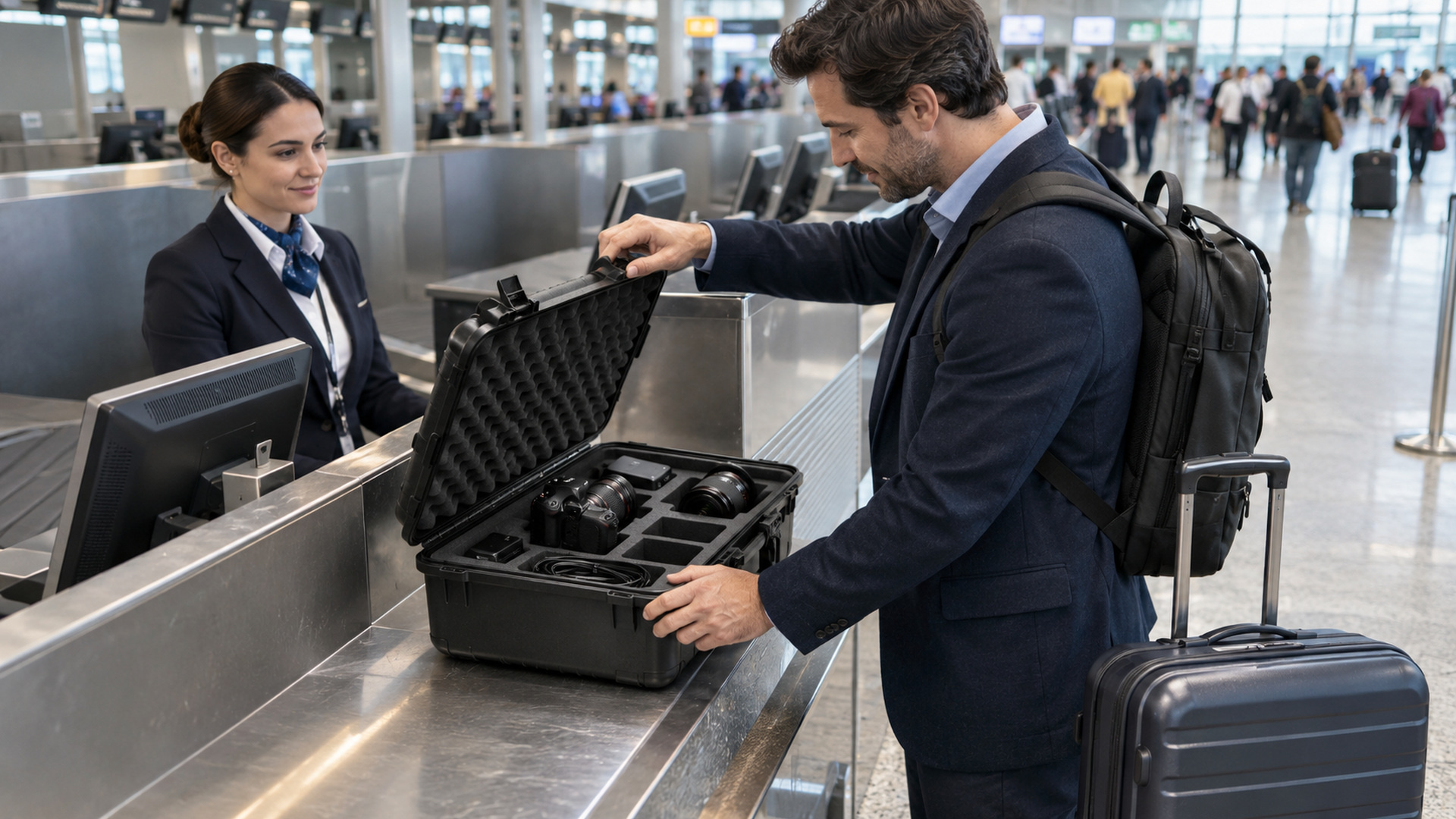
Business travellers may carry cameras, demonstration equipment, tools or batteries. Commercial allowance and safety restrictions are separate issues. The South African Civil Aviation Authority provides public guidance on dangerous goods, including lithium batteries. Check the operating airline's current rules for the exact item and obtain any required approval before travel.
Do not assume that an item accepted on one airline will be accepted in the same way on another. A connection may involve a different carrier, aircraft or country-specific restriction. If equipment is essential to a presentation, plan how it will be carried and what happens if a bag is delayed.
Record any baggage purchased with the booking and verify it on the confirmation. If a bag is added later, check the price and availability for the fare and route. The cheapest ticket before baggage is not always the least expensive complete journey.
Group bookings need clear responsibilities
When several employees attend the same event, there is a temptation to choose one flight and assume the same conditions apply to everyone. Travellers may start from different cities, need different return dates or carry different equipment. The final comparison should account for each passenger and the total cost to the organisation.
Confirm names and identification details according to the airline's requirements. A name correction can be different from transferring a ticket to another person, and the conditions vary. Review the passenger list carefully before payment, especially when an arranger is booking on behalf of colleagues.
A booking provider may have particular processes for group enquiries, payment deadlines or changes. Do not assume a group discount or a uniform rule without a written offer. Ask what happens if one traveller cancels, if names need correction or if the schedule changes for the group.
Provide each traveller with the relevant confirmation, baggage information and support contact. Avoid sharing booking references publicly. If the business has a travel policy, make sure the itinerary and payment arrangement comply with it without adding unnecessary personal information to a widely shared document.
Booking support and disruption
A business traveller should know who issued the ticket, which airline operates each flight and whom to contact for a change. An agency or booking service may handle some requests, while the operating airline may provide airport information. The correct route can depend on the ticket and the type of disruption.
Keep the confirmation, ticket details and verified contact information accessible during travel. If an airline changes a schedule, review the new times and the effect on meetings, connections and ground transport. Contact the appropriate provider promptly if the proposed arrangement does not work.
A missed meeting can have consequences beyond the fare. A practical contingency might include an earlier departure, a remote attendance option or a colleague who can cover the start. The right plan depends on the importance of the engagement and the cost of alternatives. There is no need to buy the most flexible ticket for every trip, but the decision should be deliberate.
If expenses arise during a disruption, retain relevant receipts and follow the provider's claims process. Do not assume that every expense will be reimbursed. The applicable terms, facts and law determine what may be available.
Payment, records and security
Businesses need a clear record of the traveller, itinerary, amount paid and any additional services. Check the final currency and payment method before confirming. A card authorisation, a completed charge and a later refund can appear differently on an account; ask the provider if a transaction is unclear.
Flight-booking scams can imitate airline or travel-service communications. If an unexpected message asks for an urgent second payment or a change of payment method, verify it through independently obtained official contact details. Avoid sending payment card information or passport copies through an unverified link or message.
Use the booking reference carefully. It is useful for managing a reservation but may provide access to personal travel details when combined with a surname or other information. Share it only with people who need it, and follow the organisation's data-handling practices.
An arranger should also confirm what documentation the organisation needs for expense reporting. A booking confirmation and an invoice may serve different purposes. Ask the provider about the documents available rather than assuming that every channel issues them in the same format.
A practical comparison for each trip
Begin with the business objective and the times that cannot change. Compare suitable airports and flights, then add required baggage, transport and accommodation. Review the fare's change and cancellation conditions, the connection arrangement and the support contact. For international trips, verify the traveller's documentation and transit requirements through official sources.
The result may be the lowest available fare, but it may also be a different flight that reduces a costly transfer or better supports a fixed meeting. The goal is to understand the trade-offs before payment. A clear comparison makes it easier to explain the decision to the traveller and the organisation.
To explore domestic and international flight options from South Africa, visit Cheap Flight SA. Review the final price and ticket conditions for the selected itinerary before booking.
Elisha Roodt
Our travel editorial desk specializes in uncovering the best flight deals and destination insights within South Africa. We bring you first-hand updates on airline industry moves and budget travel hacks.
More From Travel Industry

Why Airlines Care About Your Connection Time Windows
Airlines treat connection times as precision timing tools that drive network efficiency, schedule flow, and global hub synchronization.

How Flight Routes Drive Tourism Growth and Regional Prosperity
Discover how airline routes influence global tourism, boost regional economies, and improve destination accessibility worldwide.

How Airlines Are Shifting to Eco-Friendly Travel
Airlines respond to eco-conscious travelers with carbon offsets, fuel-efficient fleets, and green marketing strategies in commercial tourism.
Stay Informed, Stay
Ahead of the Curve
We don't just follow the headlines — we dive deeper. Our well-researched content is designed to empower you with the knowledge needed to navigate an industry shaped by innovation.
Seasoned Professionals
Industry stats and market performance metrics.
Passionate Enthusiasts
Vehicle launches and future transport concepts.