Redefining the Journey
Once upon a time, travel was about the destination—the cobblestoned streets of Florence, the jungle-fringed beaches of Tulum, the neon-lit skyline of Tokyo. The journey, often uncomfortable and perfunctory, was merely a means to an end. Today, however, a paradigm shift is taking flight. Increasingly, the travel experience begins not upon arrival, but at 35,000 feet.
In an age where time is money and exclusivity is currency, premium cabins have become more than just a way to fly—they're becoming aspirational experiences in their own right. From first-class suites with privacy doors and onboard showers to business class pods with Michelin-starred menus, the luxury of air travel has evolved. But as airlines invest billions into refining their top-tier offerings, an intriguing question arises: Are premium cabins becoming travel destinations in their own right?
The Allure of Altitude: Why Flying First-Class Feels Like a Destination
Flying in a premium cabin used to be about arriving well-rested. Today, it’s about indulging in a curated, high-altitude lifestyle. Flagship products like Emirates First Class, Singapore Airlines Suites, and Qatar Airways’ Qsuite offer something more than comfort—they offer status, ritual, and an elevated sensory experience.
Take Emirates’ Boeing 777 First Class: a fully enclosed suite with floor-to-ceiling doors, virtual windows, a Bowers & Wilkins sound system, and a personal minibar. Or consider Air France’s La Première—with four suites per cabin, exclusive lounge access at Charles de Gaulle, and menus curated by Alain Ducasse. These are not just flights. They’re invitations to enter a world apart, if only for a few hours.
For some, the allure is strong enough to justify booking a first-class ticket not as a means to get somewhere, but for the experience itself—such as the aviation enthusiast who flew from New York to Tokyo and back, never leaving the airport, purely to enjoy ANA’s new "The Suite".
The Economics of Experience: Why Airlines Are Banking on Luxury
The pandemic may have temporarily stalled long-haul travel, but it sparked a consumer craving for comfort, hygiene, and control. Airlines responded by doubling down on their premium offerings. While economy cabins were trimmed and routes consolidated, first and business class were reimagined as sanctuaries.
And it's working.
Premium cabins, though accounting for a fraction of seats, contribute disproportionately to revenue. According to the International Air Transport Association (IATA), premium passengers account for just 6–8% of traffic but generate up to 30% of passenger revenue. This imbalance is particularly stark on international routes, where business and first class tickets often cost 5–10 times more than economy.
This profit margin incentivises airlines to treat premium cabins not just as a service, but as a luxury product. The result? Cabins crafted like boutique hotels, menus sourced from top chefs, sommeliers on call, and amenity kits that rival five-star spa treatments.
Cabin Couture: The Rise of Design-Led Interiors
The modern premium cabin isn't just comfortable—it's beautiful. High design is no longer reserved for hotel lobbies or yacht interiors. From custom upholstery to mood lighting and sustainable textiles, airlines are now collaborating with design houses, fashion labels, and wellness brands to elevate the in-flight environment.
Etihad partnered with Acumen and BMW Designworks to develop its Business Studio and The Residence—a three-room suite with a private shower, living area, and butler. Virgin Atlantic’s Upper Class features mood-lit lounges with cocktail bars and futuristic finishes, while Qatar’s Qsuite uses sliding doors, ambient lighting, and herringbone configurations to create privacy without claustrophobia.
These aren’t just aesthetic upgrades—they’re marketing strategies. By creating cabins that look and feel like destinations, airlines turn flight into fantasy.
Gastronomy at Altitude: When the Meal Is the Moment
Once derided as reheated tray-table slop, airline food has undergone a radical reinvention at the front of the plane. Today’s premium cabins offer menus that rival ground-level fine dining, with seasonal ingredients, curated wine lists, and bespoke service.
Japan Airlines works with Michelin-starred chefs to deliver regional Japanese kaiseki meals. Singapore Airlines consults with an international culinary panel that includes chefs from The Tasting Room (Macau) and Restaurant Gordon Ramsay (London). Air France serves wines selected by sommelier Paolo Basso and meals designed by Joël Robuchon’s protégés.
Some airlines now even offer à la carte dining on demand, letting passengers customise when and what they eat. The goal? To make dinner at 35,000 feet a culinary destination in its own right.
Wellness in the Air: Designing for the Body and Soul
As travel becomes more demanding, passengers are prioritising wellness. Premium cabins now cater not just to physical comfort but mental and emotional well-being. Air New Zealand’s new business-class cabins include sleep-focused lighting and calming colour palettes. Emirates offers in-flight spa treatments in its A380 shower suites. And airlines like Delta and JetBlue partner with wellness brands to supply aromatherapy kits, noise-cancelling headphones, and breathable sleepwear.
Airlines are even tackling jet lag with science. Qantas’ “Project Sunrise” initiative, which plans to offer ultra-long-haul flights from Sydney to London and New York, is developing cabin environments using circadian lighting, wellness-focused meals, and exercise guides to keep passengers in sync.
The goal is no longer to survive the flight—it's to arrive better than when you left.
Airport to Aisle: The Ground Experience as Part of the Destination
If the flight is now a destination, then the journey begins long before takeoff. Airline lounges have become pre-flight sanctuaries where luxury and privacy reign supreme. Think spa treatments, à la carte dining, nap suites, mixologists, and private security channels.
Qatar’s Al Mourjan Lounge in Doha spans two floors with marble accents and a resort-like vibe. Lufthansa’s First Class Terminal in Frankfurt has its own passport control and limousine transfer to the aircraft. The Emirates First Lounge in Dubai includes wine cellars and cigar rooms.
For some, this ground experience—seamless, curated, serene—is worth the ticket price alone. It sets the tone, delivering a whisper of exclusivity that stays with you all the way to your seat.
The Social Media Effect: Flying First for the Gram
There’s a performative aspect to luxury flying that shouldn’t be ignored. In the Instagram era, first-class suites are as much about personal enjoyment as they are about prestige.
Photos of Krug in crystal flutes, Dom Pérignon beside a filet mignon, or a suite lit in soft gold tones generate hundreds of thousands of likes. Influencers and frequent flyers alike use social platforms to showcase the aspirational lifestyle of high-end travel.
Some travellers even choose routes based on product availability—booking Singapore Airlines First from Singapore to Hong Kong for a two-hour flight just to experience the cabin and document it online. For these passengers, the cabin is the destination, and the trip itself becomes content.
Accessibility vs Exclusivity: A Class Apart?
Despite its appeal, premium flying is inherently exclusive. While credit card points and frequent flyer schemes have made business class more accessible to middle-income travellers, true first-class luxury remains elusive for most.
And that’s part of the appeal.
There’s a growing awareness that premium cabins don’t just promise comfort—they create a curated world where friction is minimised, space is protected, and service is deeply personal. For high-net-worth individuals, celebrities, and CEOs, this is non-negotiable.
Still, aspirational flyers—those who save miles or book flash sales—are growing. Airlines walk a fine line between maintaining exclusivity and expanding their audience, making it possible, if rare, for the average traveller to touch the sky in style.
Are We There Yet? Or Does It Even Matter?
So, are premium cabins becoming destinations in their own right?
In many ways, yes.
They offer sanctuary, sensory indulgence, privacy, and performance. They are curated environments that rival the best hotel suites and restaurants. For the global elite and aspirational middle-class alike, they represent a new kind of luxury: the ability to slow down, escape, and be pampered—while still in motion.
In the age of experiential travel, where memory outweighs mileage, and the “how” of travel matters just as much as the “where,” premium cabins offer something more: the rare luxury of being nowhere, yet completely content.
Perhaps that’s the ultimate destination.
The Future of Flight as Experience
The aviation industry continues to evolve. Supersonic jets, zero-emission aircraft, and space tourism loom on the horizon. But amid all this progress, premium cabins remain grounded in one idea: to elevate the journey.
Whether for a few hours or across multiple time zones, luxury in the skies is no longer just a perk—it’s an experience carefully crafted to be remembered, envied, and repeated.
In a world rushing to get somewhere, perhaps the greatest luxury is to enjoy the ride.
Gerald Ferreira
Our travel editorial desk specializes in uncovering the best flight deals and destination insights within South Africa. We bring you first-hand updates on airline industry moves and budget travel hacks.
More From South Africa
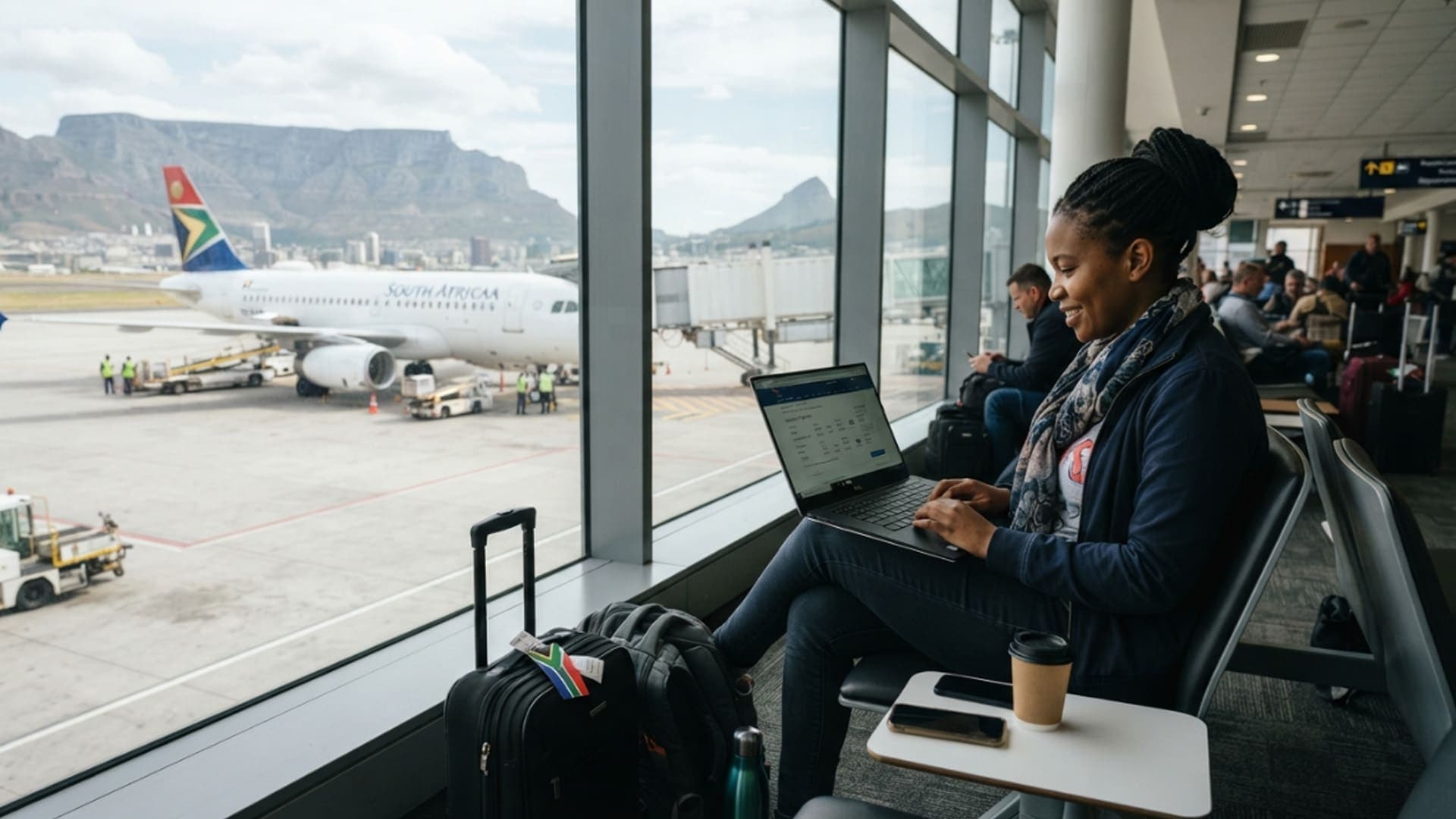
How to Find Cheaper Domestic Flights in South Africa Without Missing the Important Extras
A lower fare is only useful when it still suits your travel plans. Learn how to compare South African domestic flights by travel date, airport, baggage, seat selection and total trip cost.
How to Find Cheap Flights in South Africa
Learn how booking windows, timing strategies, and fare trends can help South Africans consistently find cheaper domestic and international flights.
The Future of Air Travel in Africa: Infrastructure, Innovation, and Investment
Stay Informed, Stay
Ahead of the Curve
We don't just follow the headlines — we dive deeper. Our well-researched content is designed to empower you with the knowledge needed to navigate an industry shaped by innovation.
Seasoned Professionals
Industry stats and market performance metrics.