
Flight booking technology explained: what changes for South African travellers
Searching for a flight takes seconds, but the offer on the screen may depend on several systems exchanging information about schedules, availability, fares and optional services. After payment, other processes handle the booking record, ticket, check-in and any later change. Improvements in these systems can make travel easier, but a digital interface does not remove the need to read the conditions of the journey.
For travellers in South Africa, the practical questions are familiar: is the flight available on the selected date, what baggage is included, who operates it and whom should you contact if plans change? Technology is most useful when it makes those answers clearer. It can also create confusion if a price updates during a search or if a passenger assumes that an online confirmation is identical to every document needed for travel.
This article explains several developments in flight retailing and airport technology. It distinguishes current capabilities from industry ambitions and avoids assuming that a particular airline, airport or booking service has implemented every feature described.
Search results bring together changing information
A flight search typically starts with the route, dates and passengers. The system returns available options based on information supplied through airline and distribution channels. Results can differ by departure time, carrier, connection, fare and included services.
Availability and price can change. A result displayed during an initial search is not necessarily held indefinitely, and the final amount may depend on the selected fare and extras. Review the total and conditions before payment. A screen showing an earlier price should not be treated as proof that the same offer remains available later.
Search filters can help narrow options, but they also hide results outside the selected criteria. A non-stop filter removes connecting itineraries; a specific airport selection can exclude another airport serving the same city. Clear or adjust filters when you want to understand the full range of choices.
The sort order matters too. A result shown first may be sorted by price, duration or another criterion. It is not automatically the best choice for your circumstances. Compare departure and arrival times, transfer requirements, baggage and the fare rules before deciding.
The booking record and the ticket serve different purposes
After a traveller selects an itinerary, a reservation record holds details associated with the booking. A ticket is a transport document issued for the journey. Depending on the arrangement, optional services may be recorded separately. The exact documents and references a traveller receives can vary by airline and booking channel.
A booking reference is useful for retrieving or managing an itinerary, but it is sensitive information. Combined with a surname or other details, it may allow access to parts of a reservation. Avoid posting it publicly or including it in a photograph shared online. Give it only to people who need it for the journey.
After payment, check that the confirmation and ticket information match the intended passenger, route and dates. If anything is missing or incorrect, contact the responsible provider through a verified channel. Do not assume that a payment notification alone contains every detail needed to resolve an issue at the airport.
An industry move towards simpler records does not mean every airline has already replaced its existing processes. Until the provider confirms otherwise, retain the documents supplied for your booking and follow the operating airline's instructions for check-in and travel.
Offers, optional services and clearer comparisons
Airlines can offer a base fare alongside options such as checked baggage, seat selection or flexibility. Some products bundle several services; others allow travellers to add them separately. Technology can present these choices together, but the traveller still needs to compare the final total for the required services.
A lower fare without checked baggage can suit a short trip when the permitted cabin allowance is sufficient. A traveller carrying a larger case may find that adding a bag changes the comparison. Another person may prioritise a changeable ticket because meeting dates are uncertain. The best offer depends on the passenger's plans.
IATA describes its New Distribution Capability, or NDC, as a standard for exchanging information between airlines and travel sellers. Its purpose includes richer communication of airline offers. It is an industry standard, not a guarantee that every booking site shows the same airlines, fares or extras, and implementation differs between organisations.
For a traveller, the useful test is whether the chosen offer clearly states the operating carrier, fare conditions and total price. Check whether each extra is included or optional. If a particular service is essential and the description is unclear, ask the provider before paying.
Why a fare may change
A flight's price can vary with availability, travel dates, fare conditions and the services selected. Different seats on the same aircraft may be sold under different fare rules. A return journey can also combine distinct outbound and inbound options, each with its own conditions.
A price change does not necessarily mean that a site has made a mistake or that a traveller's personal browsing history caused the change. Many factors can affect an offer, and an external observer usually cannot establish the specific cause of an individual update. Avoid relying on claims that one particular search trick always produces the lowest fare.
Compare options for the dates and airports you can genuinely use. If you have flexibility, look at nearby dates or departure times, but include any extra accommodation, transport or time away from work. A cheaper ticket that requires an additional hotel night may not reduce the total cost.
When you are ready to book, check the final amount and conditions. If an offer expires or changes, decide whether the revised flight still meets your needs. Do not assume that waiting until a particular day of the week will reliably produce a lower fare on every route.
Digital check-in and boarding passes
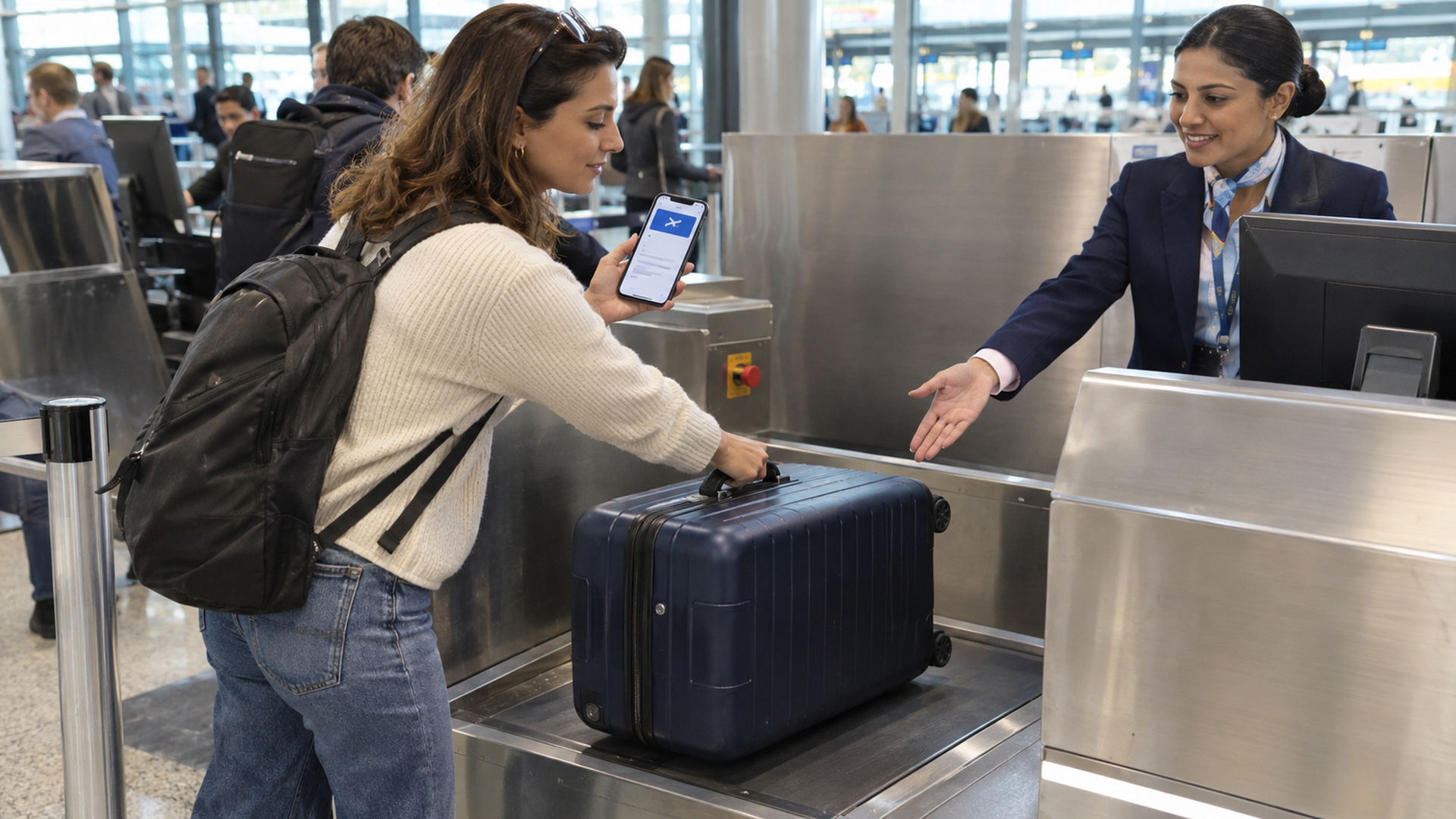
Many airlines offer online or mobile check-in for eligible journeys. The process can allow a passenger to confirm details and obtain a boarding pass without completing every step at an airport counter. Availability, opening times and document checks depend on the airline and route.
Online check-in does not always remove the need to visit a desk. A traveller with checked baggage may need to use a bag-drop facility, and some journeys require document verification before a boarding pass is issued or accepted. Follow the operating airline's current instructions and deadlines for the specific flight.
A mobile boarding pass is convenient, but the traveller should consider what happens if a phone is lost, damaged or out of power. Where the airline permits it, retain an accessible alternative and know how to obtain help at the airport. A screenshot may be acceptable for some systems and not for others; follow the carrier's guidance rather than assuming one method works everywhere.
Check the name, flight, date and airport on the boarding pass. A gate or boarding time can change, so continue to monitor airline and airport updates. A digital pass is part of the journey, not a substitute for the identification or passport required by the airline and authorities.
Biometrics and digital identity are developing unevenly
Some airports and airlines are exploring or using biometric and digital identity processes. IATA's One ID programme describes work on contactless travel and digital identity. A programme or pilot does not mean that all airports, airlines or border authorities use the same system, or that a physical passport is no longer needed.
Participation, eligibility and the documents accepted depend on the actual service and applicable authorities. Travellers should follow the instructions for their flight and carry the documents required for their journey. Do not discard or leave a passport behind because a digital identity concept has been reported in the news.
Privacy is part of the choice. A service should explain what information is collected, who processes it, whether participation is optional and what alternative is available. The traveller can review the provider's current information and ask questions before using an optional feature.
For business and family travel, avoid assuming that everyone in a group can use the same digital route. Children, different nationalities and travellers with particular documentation may have different requirements. Allow time for the process that actually applies to each passenger.
Flight updates and communication
Airlines and booking services may send schedule changes, reminders or boarding information by email, app notification or message. These can help a traveller respond to a changed gate or departure time. The usefulness depends on accurate contact information and the ability to distinguish a genuine update from a fraudulent message.
Check the flight status through the airline's official website or application when an unexpected message requests payment or personal information. Independently verify the contact address or number. A message can contain a familiar airline name or booking details and still be fraudulent.
If the itinerary changes, review the complete journey. A new arrival time may affect a connection, a hotel check-in or a ground transfer. If the revised arrangement is unsuitable, contact the responsible provider and keep the communication. Options depend on the ticket, the reason for the change and applicable rules.
Do not rely on one notification channel if access to it may be limited abroad. Keep a copy of the itinerary and verified support details in a form you can access during the journey. Protect your booking reference and personal documents when sharing updates with colleagues or family.
Baggage information still needs verification
Technology can show an allowance during the booking process, but the exact rules are set by the relevant airlines and fare conditions. Cabin-bag dimensions, weight and number of pieces can differ. A checked bag may be included in one fare and an extra in another.
For an itinerary involving multiple carriers, confirm how the allowance applies to the complete journey. IATA's interline baggage guidance illustrates that baggage arrangements can involve carrier-specific rules. The passenger's confirmation and the responsible airline or booking provider are the practical sources for a particular ticket.
Safety restrictions are separate from the purchased allowance. The South African Civil Aviation Authority explains that dangerous-goods rules apply to air transport. Check current airline guidance for batteries, power banks and other restricted items, especially across international connections.
If you purchase an additional bag, retain the confirmation and check that it applies to the intended flight. If an online display is unclear or two carriers give different information, seek clarification before arriving at the airport rather than relying on an assumption.
A practical way to use digital tools
Start with the route, dates and passengers, then use filters to explore options you can actually take. Compare the complete price and the journey, including the airport, connection, baggage and fare conditions. If the plans may change, understand the cost and process before choosing a restrictive ticket.
After booking, keep the itinerary, ticket information and verified contact details. Check the operating airline's instructions for check-in and documents, and use official channels to verify unexpected requests. A digital process can reduce administrative work, but the traveller still needs to know the conditions and prepare for exceptions.
Technology is improving the way flight information can be exchanged and presented. Its benefit to a traveller is clearest when it makes a real choice easier to understand and provides dependable support if the journey changes. Explore flight options at Cheap Flight SA, then review the final offer for your itinerary before booking.
Gerald Ferreira
Our travel editorial desk specializes in uncovering the best flight deals and destination insights within South Africa. We bring you first-hand updates on airline industry moves and budget travel hacks.
More From Flight Technology

Read Flight Dates and Local Times Without Confusion
Read flight departure and arrival dates carefully, check local time zones and overnight markers, and keep calendar entries aligned with the itinerary.

Flight Price Alerts: Compare the Same Trip Each Time
Use flight price alerts with clear dates, passengers and trip limits, then verify the actual offer before treating a notification as a genuine saving.

Weather Forecasting and Aviation Safety in Air Travel
Weather forecasting is vital to aviation safety, guiding flight routes, reducing turbulence risks, and enabling precise satellite and radar-driven decision-making.
Stay Informed, Stay
Ahead of the Curve
We don't just follow the headlines — we dive deeper. Our well-researched content is designed to empower you with the knowledge needed to navigate an industry shaped by innovation.
Seasoned Professionals
Industry stats and market performance metrics.
Passionate Enthusiasts
Vehicle launches and future transport concepts.